
Improve your yield.
The risk of product contamination is proportional to the deposition rate of particles.
Monitoring particle deposition creates opportunities to improve your yield. Instant.
Yield is Lost on Surfaces.
Not in the Air.
In controlled environments, performance is often judged by what we can easily measure. Air cleanliness gives structure and reassurance. But the real impact on yield emerges where particles actually settle, on critical surfaces, in real processes. Understanding that difference, is where better decisions start.
Air classes
Air classifications describe the condition of the environment. They help structure design, validation and compliance. But they remain indirect indicators. Clean air does not automatically translate into clean outcomes at the point of process or product.
Surface risk
What ultimately affects yield is what settles on critical surfaces during real operations. Deposition is shaped by layout, airflow, materials and human behaviour. That is where risk becomes concrete, and where control might lack.
In controlled environments, performance is often judged by what we can easily measure. Air cleanliness gives structure and reassurance. But the real impact on yield emerges where particles actually settle, on critical surfaces, in real processes. Understanding that difference, is where better decisions start.
Air classes
Air classifications describe the condition of the environment. They help structure design, validation and compliance. But they remain indirect indicators. Clean air does not automatically translate into clean outcomes at the point of process or product.
Surface risk
What ultimately affects yield is what settles on critical surfaces during real operations. Deposition is shaped by layout, airflow, materials and human behaviour. That is where risk becomes concrete, and where control might lack.
Most Contamination Risks
take Shape in Day-to-Day Work.
How people move, where materials are placed, how equipment is cleaned, and how processes are actually executed on the floor.
These operational realities often drift from the assumptions made in design and qualification. Over time, small deviations accumulate. Airflow patterns change. Surfaces become more exposed. Risk shifts location without being noticed.
If yield becomes unpredictable, the cause is rarely one technical flaw. It is the slow build-up of operational choices that no longer fit the original cleanroom logic.
How people move, where materials are placed, how equipment is cleaned, and how processes are actually executed on the floor.
These operational realities often drift from the assumptions made in design and qualification. Over time, small deviations accumulate. Airflow patterns change. Surfaces become more exposed. Risk shifts location without being noticed.
If yield becomes unpredictable, the cause is rarely one technical flaw. It is the slow build-up of operational choices that no longer fit the original cleanroom logic.

Compliance creates confidence.
Compliance creates confidence.
Blind spots create risk.
Blind spots create risk.
Making Risk
Visible.
Most control strategies rely on periodic checks and indirect indicators. They tell you something about conditions, but little about how contamination actually behaves at the point of process.
Without visibility at surface level, risk remains abstract. It is discussed in meetings, reviewed in reports, and assumed to be stable between audits.
When yield starts to drift, organisations often discover too late that the risk landscape has already changed. What is missing is not more compliance, but a clearer picture of where particles end up during real operations.
Most control strategies rely on periodic checks and indirect indicators. They tell you something about conditions, but little about how contamination actually behaves at the point of process.
Without visibility at surface level, risk remains abstract. It is discussed in meetings, reviewed in reports, and assumed to be stable between audits.
When yield starts to drift, organisations often discover too late that the risk landscape has already changed. What is missing is not more compliance, but a clearer picture of where particles end up during real operations.

Most monitoring in cleanrooms is episodic
Measurements are taken at fixed moments, under controlled conditions, often far removed from daily operational reality.
But contamination risk is not static
It evolves with process changes, workload, behaviour and layout adjustments. What settles on surfaces today is not necessarily what settled there last week.
Understanding deposition dynamics over time adds a different layer of insight. It shifts monitoring from a snapshot of conditions to a view on how risk actually develops where it matters most.
Most monitoring in cleanrooms is episodic
Measurements are taken at fixed moments, under controlled conditions, often far removed from daily operational reality.
But contamination risk is not static
It evolves with process changes, workload, behaviour and layout adjustments. What settles on surfaces today is not necessarily what settled there last week.
Understanding deposition dynamics over time adds a different layer of insight. It shifts monitoring from a snapshot of conditions to a view on how risk actually develops where it matters most.
HIDDEN RISK
What you don’t see
still impacts your yield
What you don’t see still impacts your yield
Cleanroom control relies on snapshots. But risk develops in between. Particles don’t follow measurement schedules. They move, settle and build up as processes run, people interact and conditions shift. Making that behaviour visible changes how you manage your environment.
Cleanroom control relies on snapshots. But risk develops in between. Particles don’t follow measurement schedules. They move, settle and build up as processes run, people interact and conditions shift. Making that behaviour visible changes how you manage your environment.
Microscopic particle deposition can affect product performance long before airborne particle levels exceed specification. Surface cleanliness monitoring helps identify contamination risks where sensitive electronic assemblies remain exposed.
Read more

Electronics
Modern automotive components operate under increasingly strict cleanliness requirements. Deposition monitoring provides visibility into contamination risks affecting sensors, fuel systems, braking components and battery production.
Read more

Automotive
Critical aerospace assemblies often remain exposed for extended periods during integration and testing. Measuring particle deposition helps protect sensitive surfaces throughout the production process.
Read more

Aerospace
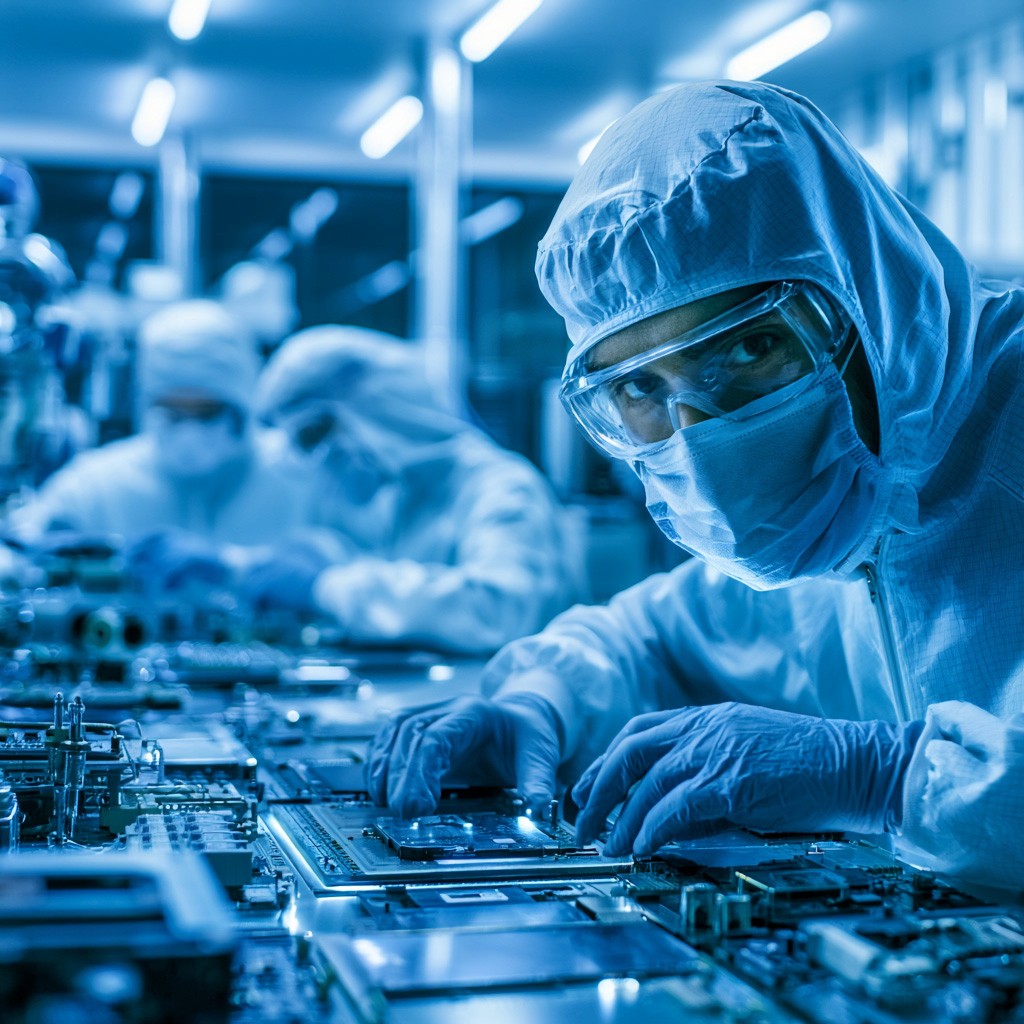
Medical products require controlled manufacturing environments to minimize contamination risk. Surface-based monitoring supports cleanliness control for implants, instruments and diagnostic devices.
Read more
Medical Devices
Defense programs often combine strict cleanliness requirements with highly secure production environments. Deposition monitoring provides contamination insight while maintaining full control over sensitive operational data.
Read more

Defense
Semiconductor back-end processes involve highly sensitive product surfaces where a single particle may affect yield. Deposition monitoring measures contamination where it matters most: on the product itself.
Read more

Semiconductor
From optics and photonics to precision mechanics and printhead manufacturing, many products depend on controlled surface cleanliness. Deposition monitoring provides a measurable basis for contamination control across diverse applications.
Read more

Other Industries
Microscopic particle deposition can affect product performance long before airborne particle levels exceed specification. Surface cleanliness monitoring helps identify contamination risks where sensitive electronic assemblies remain exposed.
Read more
Electronics
Modern automotive components operate under increasingly strict cleanliness requirements. Deposition monitoring provides visibility into contamination risks affecting sensors, fuel systems, braking components and battery production.
Read more
Automotive
Critical aerospace assemblies often remain exposed for extended periods during integration and testing. Measuring particle deposition helps protect sensitive surfaces throughout the production process.
Read more
Aerospace
Medical products require controlled manufacturing environments to minimize contamination risk. Surface-based monitoring supports cleanliness control for implants, instruments and diagnostic devices.
Read more
Medical Devices
Defense programs often combine strict cleanliness requirements with highly secure production environments. Deposition monitoring provides contamination insight while maintaining full control over sensitive operational data.
Read more
Defense
Semiconductor back-end processes involve highly sensitive product surfaces where a single particle may affect yield. Deposition monitoring measures contamination where it matters most: on the product itself.
Read more
Semiconductor
From optics and photonics to precision mechanics and printhead manufacturing, many products depend on controlled surface cleanliness. Deposition monitoring provides a measurable basis for contamination control across diverse applications.
Read more
Other Industries
Microscopic particle deposition can affect product performance long before airborne particle levels exceed specification. Surface cleanliness monitoring helps identify contamination risks where sensitive electronic assemblies remain exposed.
Read more
Electronics
Modern automotive components operate under increasingly strict cleanliness requirements. Deposition monitoring provides visibility into contamination risks affecting sensors, fuel systems, braking components and battery production.
Read more
Automotive
Critical aerospace assemblies often remain exposed for extended periods during integration and testing. Measuring particle deposition helps protect sensitive surfaces throughout the production process.
Read more
Aerospace
Medical products require controlled manufacturing environments to minimize contamination risk. Surface-based monitoring supports cleanliness control for implants, instruments and diagnostic devices.
Read more
Medical Devices
Defense programs often combine strict cleanliness requirements with highly secure production environments. Deposition monitoring provides contamination insight while maintaining full control over sensitive operational data.
Read more
Defense
Semiconductor back-end processes involve highly sensitive product surfaces where a single particle may affect yield. Deposition monitoring measures contamination where it matters most: on the product itself.
Read more
Semiconductor
From optics and photonics to precision mechanics and printhead manufacturing, many products depend on controlled surface cleanliness. Deposition monitoring provides a measurable basis for contamination control across diverse applications.
Read more
Other Industries
Frequently
Asked Questions.
What is particle contamination and why does it matter in cleanrooms?
How can I measure contamination levels in real time?
What are the most common sources of contamination in a cleanroom?
How accurate do my measurements need to be to stay compliant?
How can inline measurement help improve yield and reduce waste?
Seeing
Deposition.
Most monitoring frameworks describe what is present in the air. They say little about what actually settles on critical surfaces during operations.
Deposition translates abstract contamination into concrete exposure. It shows where particles accumulate, how patterns shift over time, and where risk concentrates in practice rather than in theory.
By looking at deposition, attention moves from conditions to consequences. From compliance with an environment to understanding impact on the product.
Most monitoring frameworks describe what is present in the air. They say little about what actually settles on critical surfaces during operations.
Deposition translates abstract contamination into concrete exposure. It shows where particles accumulate, how patterns shift over time, and where risk concentrates in practice rather than in theory.
By looking at deposition, attention moves from conditions to consequences. From compliance with an environment to understanding impact on the product.


Subscribe to our newsletter
Stay up to date on cleanrooms latest updates, expert insights and resources. Right in your inbox!


Subscribe to our newsletter
Stay up to date on cleanrooms latest updates, expert insights and resources. Right in your inbox!
Subscribe to our newsletter
Stay up to date on cleanrooms latest updates, expert insights and resources. Right in your inbox!